

APOSTASY – WATCHMAN’S WARNING
When the Church Rejects God While Still Using His Name

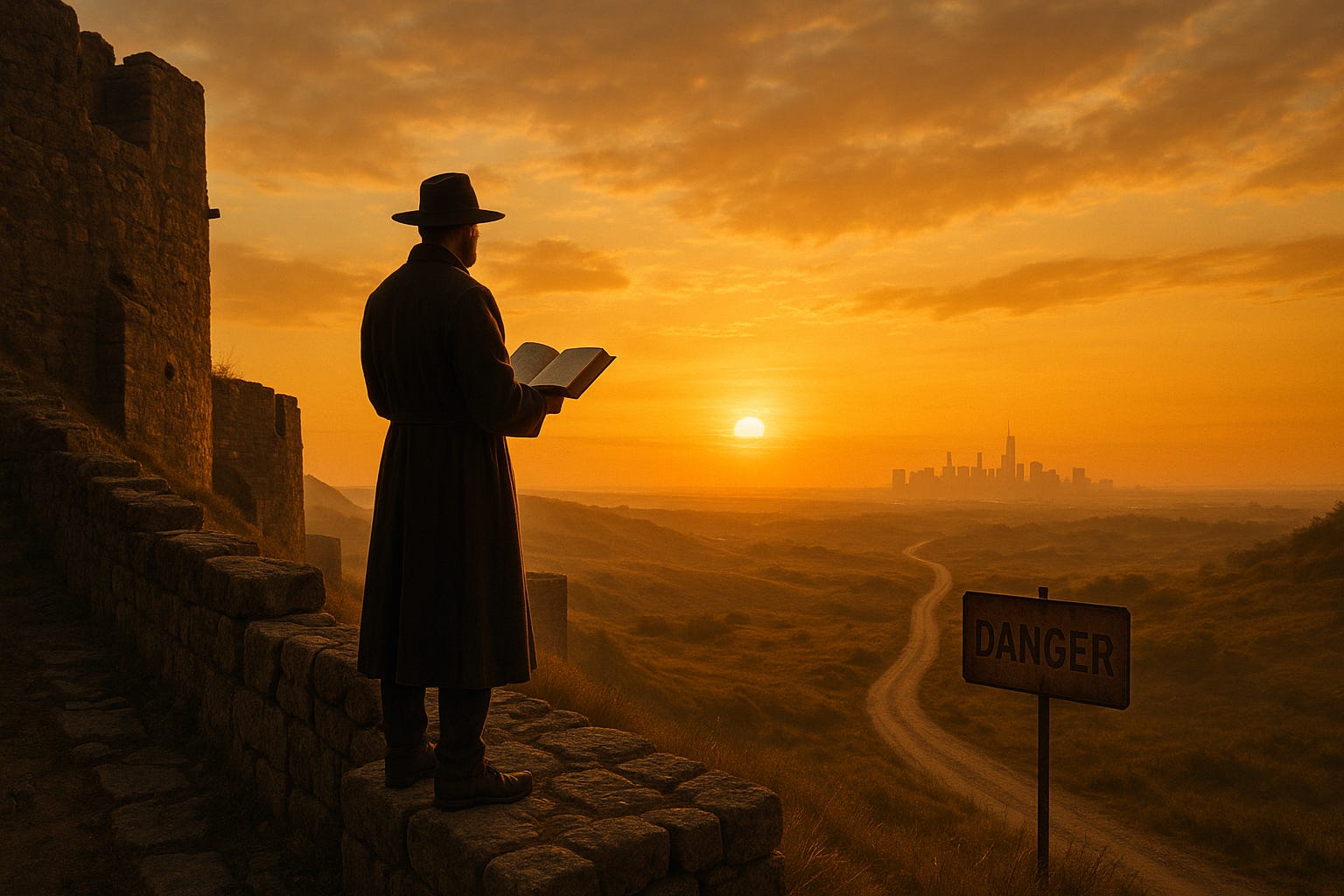
Before I began this journey, this calling on my life, I had never heard the word apostasy. I didn’t care either. Life for me was fine. I was baptized in the church, I believed in God, what else did I need? Was I missing something?
“You believe that God is one. You do well; the demons also believe—and shudder.” — James 2:19
THE WATCHMAN’S BURDEN
Have you ever felt the weight of watching the people you love drift away while thinking they’re anchored and safe? The heartbreak of seeing the danger before they do? If you’re a watchman who feels the grief of God and the joy for what He’s doing, but heaviness for what must fall—you know this burden.
It is impossible to stay silent when you see the sword coming. While the world watches and hopes for a better tomorrow or a return to how it was before, do you see something different? That what is missing today was actually missing yesterday? That the power and light the early church walked in with the power and tangible presence of God, the gifts of the Spirit, the supernatural reality of the kingdom, has been absent for generations. We’ve been taught to call that absence “normal”?
THE DRIFT: WHAT APOSTASY IS AND HOW IT HAPPENED
What apostasy actually is, believe it or not, is not the world rejecting God, but the church rejecting God while still using His name. It’s singing songs that create an emotional stir about the God they believe exists, but do not obey on other days.
There are those who have studied intently and know Scripture but are without surrender, calling Him Lord while living as lords of their own life. Are we mistaking agreement for repentance, emotion for transformation? Have we accepted a form of faith while remaining hollow inside? The truth is shown in the difference between the Holy Spirit walking beside you and the Holy Spirit dwelling inside of you.
“Holding to a form of godliness, but having denied its power; keep away from such men as these.” — 2 Timothy 3:5
This didn’t happen overnight. The church didn’t wake up one day and decide to reject God’s power. It was a slow trade, one compromise at a time. We traded repentance for reassurance. Salvation for sentiment. Holiness for “I’m doing my best.” Obedience for “nobody’s perfect.” Fear of God for “God understands.” Discipleship for attendance. Conviction for comfort.
Somewhere along the way, we stopped expecting God to move and started being satisfied when He didn’t. We read about the early church in Acts - the healings, the prophecies, the power of the Spirit manifesting in undeniable ways - and we called it “a different dispensation.” We were taught that those things ended with the apostles. That the supernatural gifts ceased. That prophecy, healing, tongues, miracles - all of it was for “back then,” not for now.
But what if that teaching itself was the apostasy? What if convincing the church that God’s power was no longer available was the enemy’s greatest victory? Because a powerless church is a harmless church. A church that sings about God but never expects Him to show up is no threat to the kingdom of darkness.
The early church turned the world upside down because they carried the manifest presence of God. They didn’t just believe in the Holy Spirit - they were filled with the Holy Spirit. They didn’t just study Scripture - they lived in the power Scripture described. When Peter’s shadow healed the sick, when Paul raised the dead, when ordinary believers cast out demons and spoke in tongues, the world had to reckon with a God who was real, present, and active.
But we’ve been taught to be comfortable without that. We’ve built entire theological systems to explain why we shouldn’t expect it. And in doing so, we’ve accepted a form of godliness while denying its power.
“Jesus Christ is the same yesterday and today and forever.” — Hebrews 13:8
THE SIGNS ALREADY PRESENT: RECOGNIZING APOSTASY IN THE CHURCH TODAY
If apostasy is the church rejecting God while still using His name, then what does that actually look like? How do you recognize it when it’s happening? The answer is uncomfortable because the signs aren’t always loud. They’re subtle. They’re comfortable. They look like normal church life to most people.
But when you hold them up against Scripture, the gap becomes undeniable.
No hatred of sin, only discomfort with consequences.
The modern church doesn’t hate sin. It hates what sin costs. We’re bothered when sin creates drama, when it damages our reputation, when it leads to consequences we can’t escape. But we don’t hate the sin itself. We negotiate with it. We explain it. We call it a struggle, a weakness, a battle we’re working on. We treat sin like a bad habit instead of rebellion against a holy God.
Scripture says something different.
“You who love the Lord, hate evil!” — Psalm 97:10
Not manage evil. Not minimize evil. You hate it. The early believers turned away from sin with revulsion, not regret. They didn’t just stop sinning because it was inconvenient. They stopped committing the sins in their life because they loved God and hated anything that grieved Him.
Do you see that in today’s church? We’re more concerned with being relatable than being righteous. We talk about grace as if it’s permission to forgive instead of power. And we’ve convinced ourselves and our children that God understands, so we don’t have to change. As long as we repent.
No hunger for God, only hunger for inspiration.
People fill churches looking for a word that makes them feel better, a sermon that motivates them, music that stirs their emotions. They want to be inspired. They want answers that many don’t find. They want to leave feeling hopeful, encouraged, and ready to face the week. And there’s nothing wrong with encouragement or exhortation.
But where is the hunger for God Himself?
“As the deer pants for the water brooks, so my soul pants for You, God.” — Psalm 42:1
David wasn’t looking for inspiration. He was desperate for God’s presence. He wasn’t content with a good message. He needed God Himself. The early church didn’t gather just to hear teaching. They gathered because they couldn’t stay away from the presence of the Holy Spirit. They fasted and prayed.
They sought God with everything in them.
Today? We’ll skip a prayer meeting but never miss a ball game. We’ll go weeks without opening the Bible, but complain when the sermon doesn’t land. We consume content about God without ever pursuing God or applying it in our lives. We’ve replaced intimacy with information, covenant with convenience, and we don’t even notice what’s missing.
No transformation, only good intentions.
Ask someone in the average church if they’re growing spiritually, and you’ll get the same answer every time: “I’m working on it.” “I’m trying.” “I know I need to do better.” “God’s still working on me.” Good intentions everywhere. Genuine transformation nowhere.
“Therefore if anyone is in Christ, this person is a new creation; the old things passed away; behold, new things have come.” — 2 Corinthians 5:17
Paul didn’t say we’re slowly becoming new. He said we ARE new. The old have passed away. Not gradually. Not eventually. It passed. New things came. This is the language of radical transformation, not incremental improvement.
But we’ve redefined transformation to mean trying harder. We’ve accepted a version of Christianity where nothing actually changes as long as we don’t feel bad about it. We sin the same way year after year, confessing the same struggles decade after decade, and call it a journey. Meanwhile, the world looks at the church and sees no difference between us and them except that we go to a building on Sundays. We wonder why our children leave home and leave the church behind as well.
Where is the power of the gospel that breaks chains? Where is the Spirit that produces actual change? Where is the transformation that makes people new? It’s been pushed aside for tradition and religion, denominations which, by definition, are one step down or away from.
No fear of God, only assumptions about grace.
The fear of the Lord is gone. Not just diminished. Gone. We don’t tremble at His holiness. We don’t stand in awe of His majesty. We drive through some of the most beautiful places on earth and don’t give God credit. We don’t approach Him with reverence. We’ve been taught that fear is the opposite of love, so we’ve replaced the fear of God with casual familiarity.
“The fear of the Lord is the beginning of wisdom, and the knowledge of the Holy One is understanding.” — Proverbs 9:10
Wisdom begins with fear. Not terror. Not dread. But a deep, reverent recognition of who God is and who we are in comparison. The fear of the Lord is what kept Israel from treating God like a genie. It’s what kept the early church from presuming on grace. It’s what makes sin unbearable and holiness beautiful.
But today’s modernized church has decided that grace means God doesn’t care about sin anymore. We’re all loved by God and will gain eternal life if we can just believe. We talk about His love while ignoring His holiness. We preach His mercy while forgetting His justice. And we’ve convinced ourselves that because He’s a good Father, He’ll overlook everything.
That’s not grace. That’s presumption. And it’s leading people straight into judgment while they sing worship songs. All the while mistaking joy for happiness. Assurance for security.
“They profess to know God, but by their deeds they deny Him, being detestable and disobedient and unfit for any good deed.” — Titus 1:16
THE HOUR WE’RE IN: AN HONEST ASSESSMENT
We need to talk honestly about where we are. Not to create panic, but because pretending everything is fine when the house is on fire doesn’t help anyone.
Scripture told us this would happen.
“Let no one in any way deceive you, for it will not come unless the apostasy comes first, and the man of lawlessness is revealed, the son of destruction.” — 2 Thessalonians 2:3
Paul warned the Thessalonians that before Christ returns, there must be a falling away. The Greek word is apostasia. A departure. A rebellion. Taking a standing away from their previous beliefs. This isn’t speculation. This isn’t fear-mongering. This is biblical prophecy, and we’re watching it unfold.
The falling away isn’t coming. It’s already here.
Look around within your own family, your own community. Churches full of people who profess Christ but live no differently than the rest of the world. Believers who haven’t opened their Bibles in months. Worship services packed with emotion but devoid of power. Sermons spoken in a series, leaving no room for Holy Spirit invitations. Entire congregations that haven’t seen a genuine move of the Holy Spirit in decades, if ever, and don’t even know to miss it.
These aren’t the signs that apostasy is coming. These are the tremors that it’s already begun.
But here’s what you need to understand: the Gate is not shut yet.
God doesn’t warn us about judgment after it arrives. He warns us before. That’s the whole point of a watchman. Ezekiel 33 says the watchman sees the sword coming and sounds the alarm so the people have time to respond. If there was no time left, there would be no warning. The fact that you’re reading this right now means there is still mercy available.
“Therefore, just as the Holy Spirit says, ‘Today if you hear His voice, do not harden your hearts as when they provoked Me.’” — Hebrews 3:7-8
Today. Not tomorrow. Not next week. Not when you get your life together. Today! The writer of Hebrews repeats this word over and over because “today” is the only time we’re promised. Tomorrow is not guaranteed. The window of opportunity doesn’t stay open forever.
Mercy always comes before judgment. God’s pattern throughout Scripture is to warn, to plead, to call His people back before He acts. He sent prophets to Israel for generations before the exile. He gave Nineveh time to repent. He waited 120 years while Noah built the ark. God is patient. He is long-suffering. He does not desire that any should perish.
But patience does come to an end.
“Or do you think lightly of the riches of His kindness and restraint and patience, not knowing that the kindness of God leads you to repentance?” — Romans 2:4
God’s kindness is meant to lead us to repentance, not to make us comfortable in our sin. His patience is not approval. His silence is not agreement. And the fact that judgment hasn’t fallen yet doesn’t mean it won’t.
The margin is disappearing.
I can’t tell you the day or the hour when the gate closes. I can’t point to a calendar and say, “This is your last chance.” But I can tell you what I see and what I feel in my spirit. The urgency is real. The gate is closing. Not closed, but closing.
It is not too late today. But I cannot promise you tomorrow. I can’t even promise you tonight. This isn’t meant to terrify you. It’s meant to wake you up. If you’re reading this and feeling convicted, that conviction is mercy. If you’re recognizing yourself in these signs, that recognition is grace. The Holy Spirit is still speaking. Your heart can still hear. The gate is still open.
The sword is coming. The watchman is crying out. The question is whether you’ll respond while there’s still time.
The outstretched hand is still there. The warning is love. And the call is simple: return.
“Return to Me, and I will return to you,” says the Lord of hosts.” — Malachi 3:7
WHAT MUST BE DONE NOW: THE CALL TO RETURN
So what do you do if you’ve recognized yourself in these signs? If the Holy Spirit has convicted you that you’ve been drifting? If you realize you’ve been holding a form of faith while denying its power? What if you’ve never known the difference? Been shown the truth?
It’s simple, you stop and return to the place it all began, in your heart where God first spoke to you.
Not next week. Not after you figure everything out. Not when you feel ready. Now. Today. While the gate is still open and your heart can still hear.
This isn’t about trying harder or making promises you can’t keep. This isn’t about religion or performance. This is about coming back to the Father who’s been waiting for you. This is about genuine repentance, real surrender, and walking in the power you were always meant to have. This is about not just hoping He loves you, but knowing He loves you and trusting in that love above all else.
Return to the fear of the Lord.
Stop treating God like your buddy, your therapist, or your cosmic butler. He is holy. He is righteous. He is the King of Kings and Lord of Lords. You don’t get to negotiate with Him. You don’t get to pick which commands you’ll follow. You bow before Him in reverence, or you won’t get to know Him at all.
“The fear of the Lord is the beginning of knowledge; fools despise wisdom and instruction.” — Proverbs 1:7
Without the fear of the Lord, everything else falls apart. You can’t have intimacy without reverence. You can’t have love without awe. Start here. Get on your knees and remember who God actually is. Don’t justify fear as reverence only; you should fear the One who can separate body and soul.
“And do not fear those who kill the body but are unable to kill the soul; but rather fear Him who is able to destroy both soul and body in hell.”
— Matthew 10:28
Return to actual repentance.
Not regret. Not feeling bad. Not promising to do better. Repentance means you turn around and go the other direction. You stop sinning. You cut off whatever is causing you to stumble. You don’t manage sin or make excuses for it. You kill it. You must die to self.
“Know ye not that the unrighteous shall not inherit the kingdom of God? Be not deceived: neither fornicators, nor idolaters, nor adulterers, nor effeminate, nor abusers of themselves with mankind,
Nor thieves, nor covetous, nor drunkards, nor revilers, nor extortioners, shall inherit the kingdom of God.” — 1 Corinthians 6:9–10
Paul doesn’t say these people might have a harder time getting into Heaven. He says they will NOT inherit the kingdom. Period. If you’re living in unrepentant sin and thinking you’re fine because you said a prayer once, you’re deceived. Repent. Actually repent. Turn away from the sin and toward God.
Return to obedience as the proof of love.
Jesus didn’t say, “If you love me, you’ll feel warm emotions when you worship.” He said if you love Him, you’ll obey His commands. Obedience isn’t optional. It’s not legalism. It’s the natural outflow of genuine love for God.
“If you love Me, you will keep My commandments.” — John 14:15
Stop calling Him Lord while ignoring what He says. Stop singing about surrender while living for yourself. If you love Him, obey Him. Not perfectly, but genuinely. Not to earn salvation, but because salvation has already transformed you.
Return to holiness as the requirement, not the option.
The modern church treats holiness like it’s for super-spiritual people. Don’t treat this like it’s something nice to aspire to, but not actually necessary. That’s a lie. Without holiness, no one will see the Lord.
“Pursue peace with all people, and the holiness without which no one will see the Lord.” — Hebrews 12:14
Holiness isn’t optional. It’s not for monks and missionaries. It’s for every believer. You are called to be set apart, consecrated, different from the world. That means you stop living like the world. You stop consuming what the world consumes. You stop pursuing what the world desires. You live as someone who belongs to God, like someone in pursuit of Jesus.
Return to dependence on the Spirit.
You have to understand that you cannot live the Christian life in your own strength. You were never meant to. The moment you got saved, Holy Spirit took up residence inside you when you received Him. Not to sit quietly in the background, but to lead you, empower you, transform you, and manifest the presence of God through you.
“But you will receive power when the Holy Spirit comes upon you; and you shall be My witnesses both in Jerusalem and in all Judea and Samaria, and as far as the remotest part of the earth.” — Acts 1:8
Stop trying to be a good person through your own willpower and start walking in the power of the Spirit. Pray for the gifts of God to be made known to you. Expect God to move. Stop being satisfied with a Christianity that looks exactly like moralism with Jesus’ name attached to it.
Return to real discipleship.
Going to church on Sunday is not discipleship. Listening to podcasts is not discipleship. Discipleship is learning to obey everything Jesus commanded. It’s daily dying to yourself. It’s taking up your cross. It’s following Him wherever He leads, even when it costs you everything.
“Then Jesus said to His disciples, ‘If anyone wants to come after Me, he must deny himself, take up his cross, and follow Me.’” — Matthew 16:24
Discipleship is not convenient. It’s not comfortable. It will cost you. But it’s the only way to actually follow Jesus. Stop playing church and start being the church.
Return to the cross, not the culture.
The cross is offensive. It always has been. It says you’re a sinner who deserves death, and only the blood of Jesus can save you. The culture hates that message. It wants a gospel that affirms, includes, and celebrates everyone without calling anyone to change. That’s not the gospel. That’s a lie wrapped in nice words. That’s wanting to give everyone a trophy and being inclusive in nature.
“For the word of the cross is foolishness to those who are perishing, but to us who are being saved it is the power of God.” — 1 Corinthians 1:18
The cross is the power of God. Not positive thinking. Not self-help. Not your best life now. The cross. Death to self. Resurrection to new life. If your gospel doesn’t require you to die, it’s not the gospel of Jesus Christ. Many men have tried to stand in as god, but none of them live today. Jesus Christ still lives today.
You cannot drift into Heaven. You must return to the Father.
This is not about working your way to see God. This is about recognizing that if there’s no fruit, no transformation, no power, no obedience, and no action, then there was never genuine faith to begin with. True saving faith produces change. Always.
Mercy is still available. But you have to walk through it. You have to turn around. You have to come home.
Do it today. Not tomorrow. Today.
“Seek the Lord while He may be found; call upon Him while He is near. Let the wicked abandon his way, and the unrighteous person his thoughts; and let him return to the Lord, and He will have compassion on him, and to our God, for He will abundantly pardon.” — Isaiah 55:6–7
THE WATCHMAN’S CRY: A PERSONAL PLEA
I want to, no, I need to speak to you directly now. Not as someone who has it all figured out. Not as someone who stands above you in judgment. But as someone who carries a burden I didn’t ask for and can’t put down.
I am sounding an alarm because I love you.
I don’t know you. Most of you reading this, I’ve never met. But I know what God has shown me, and I know what I see happening in the church. I see people I love drifting away while thinking they’re anchored. I see believers who are comfortable in their sin, confident in their salvation, and completely unaware of the danger they’re in.
And I cannot stay silent.
I see the danger because God allowed me to.
I didn’t wake up one day and decide to become a watchman. I didn’t choose this burden. God put it on me during the quiet hours when the noise was gone and Heaven had something to say. He showed me what’s coming. He let me feel His grief over a church that bears His name but has no power. A church that sings about Him but doesn’t obey Him. A church that’s drifting into apostasy while calling it growth.
That grief is unbearable. Not anger. Not frustration. Grief. The kind of sorrow that comes from watching people you love walk toward a cliff while they’re looking at their phones.
I feel the Father’s grief, not my own frustration.
This isn’t about me being upset that people don’t live the way I think they should. This isn’t about my preferences or my theology or my standards. This is about what God has said in His Word and what the church has become in spite of it.
God is grieved. Not surprised. Not caught off guard. But grieved. Because He knows what’s coming for those who call Him Lord but don’t really know Him. He knows the judgment that awaits those who assume grace while living in rebellion. And He’s warning them now, through whoever will speak, because there’s still time.
This is not a condemnation. It is a warning.
I’m not here to tell you you’re going to hell. I’m not here to pronounce judgment. I don’t have that authority, and I wouldn’t take it if I did. I’m here to tell you what I see. I’m here to sound the alarm before the sword arrives. I’m here to plead with you to wake up and return while the gate is still open.
Return while the road is still open.
The path back to God is not complicated. It’s not hidden. It’s not reserved for the super-spiritual. It’s open to anyone who will turn around and walk it. But it won’t stay open forever. There is a point where the gate closes. There is a point where hearts become so hard they can’t hear anymore. There is a point where God says “enough,” and mercy ends.
We are not there yet. But we are close.
Do not assume Heaven while living like hell.
You cannot live in unrepentant sin and expect to inherit the kingdom of God. You cannot call Jesus Lord while ignoring everything He commands. You cannot hold a form of faith while denying its power and think that’s enough. It’s not. It never was.
The gospel is not “believe and live however you want.” The gospel is “believe and be transformed.” If there’s no transformation, there was no genuine belief.
Do not mistake God’s patience for God’s approval.
The fact that judgment hasn’t fallen yet doesn’t mean it won’t. The fact that you’re still breathing doesn’t mean you have tomorrow. God’s patience is meant to lead you to repentance, not to make you comfortable in your rebellion.
He is waiting. But while God is patient, He will not wait forever.
Do not stay on the fence. The fence belongs to the enemy.
There is no neutral ground. You’re either walking with God or walking away from Him. You’re either surrendered to Christ or lord of your own life. You’re either filled with the Spirit or running on empty. The fence is not a safe place. It’s the most dangerous place of all.
Choose today. Choose Jesus. Choose surrender. Choose life.
Come home. Before the drift becomes a fall.
That’s what this whole warning is about. Not condemnation. Not judgment. Not trying to scare you into religion. This is about coming home. About returning to the Father who’s been waiting for you. About waking up before it’s too late.
The gate to the narrow road is open. The Father is calling. The Spirit is speaking. Your heart can still hear.
Come home.
“I call heaven and earth as witnesses against you today, that I have placed before you life and death, the blessing and the curse. So choose life in order that you may live, you and your descendants, by loving the Lord your God, by obeying His voice, and by holding close to Him; for this is your life and the length of your days, so that you may live in the land which the Lord swore to your fathers, to Abraham, Isaac, and Jacob, to give them.” — Deuteronomy 30:19–20